George Hackenschmidt: the Russian Lion who kept jumping
By StackSpan Editors
He was a world champion wrestler and record-setting strongman, gave his name to the hack squat, then spent decades writing about physical culture and philosophy. One long life makes a good story, not proof of a method: history remembers the people who lived long and forgets the ones who didn't (survivorship bias). Read this as a scrapbook. History and inspiration.
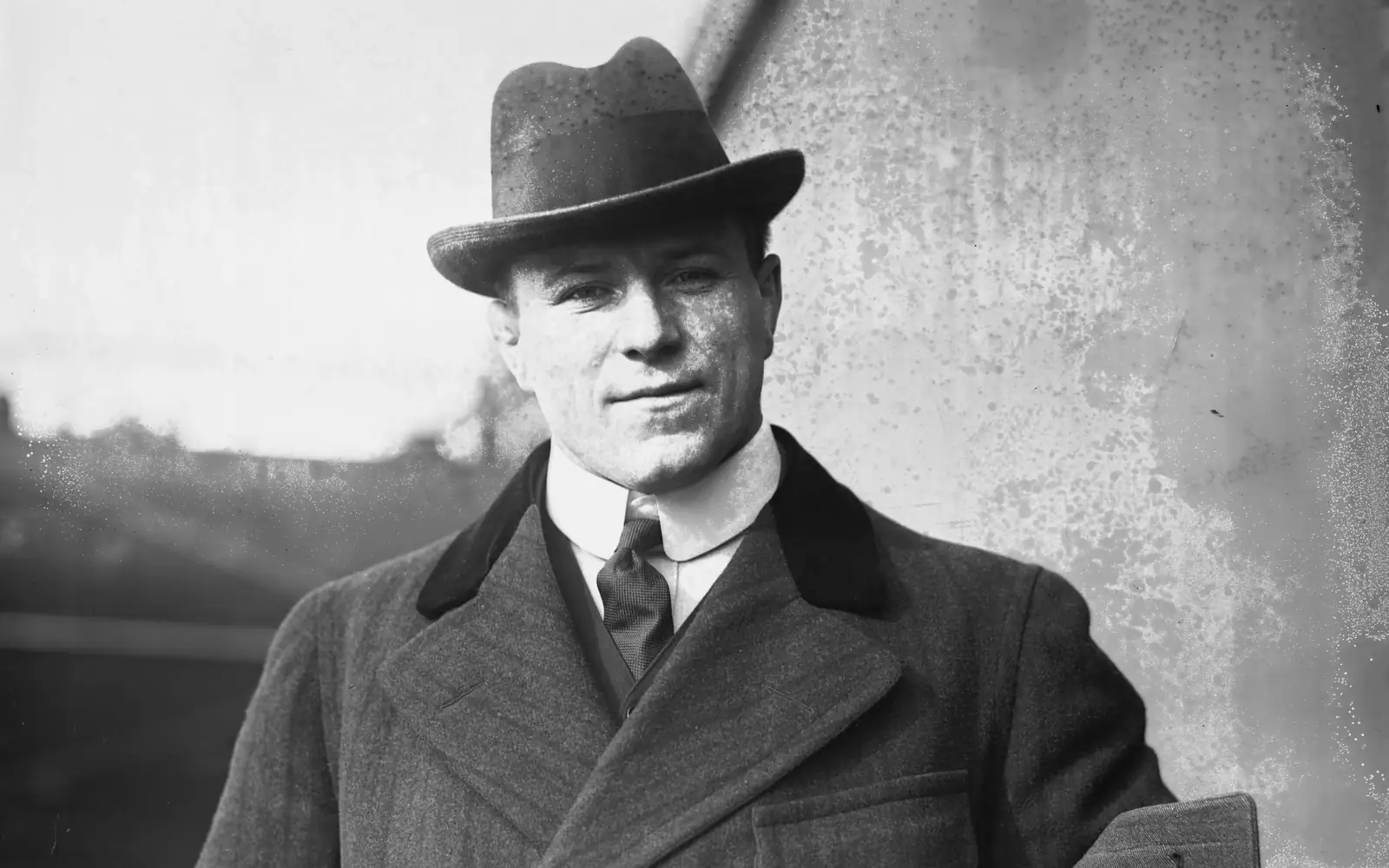
George Hackenschmidt, Bain News Service glass negative. Library of Congress, public domain.
How the facts were checked
Solid Obituaries, newspapers or scholarly sources agree.
Reported Credible secondary sources, but thin or self-reported. Marked "reported" in the text.
Legend Showman stories or later retellings with no primary evidence. Kept out of the facts, and listed in the box below so you know we checked.
The life in brief (1877–1968)
Georg Karl Julius Hackenschmidt, "The Russian Lion"
1 August 1877 – 19 February 1968 · reached 90 Solid
Solid Born in Dorpat (today Tartu, Estonia), then part of the Russian Empire. He lived most of his adult life in London and died there in 1968.
Solid World heavyweight wrestling champion in the early 1900s, often called professional wrestling's first world heavyweight champion. He beat the American Tom Jenkins in 1905, lost the title to Frank Gotch in 1908, and retired from wrestling after their 1911 rematch.
Solid Set strongman lifting records and popularized the hack squat, the exercise still named after him.
Solid Later wrote books on physical culture and philosophy, starting with The Way to Live (1908).
A note on dates: sources differ. Most references, including Wikipedia, give 1 August 1877 and an age of 90 at death. The 2013 Iron Game History article gives 2 August 1878, which would make him 89. We use the more widely cited date.
How he trained
Wrestling, feats of strength, and a lot of jumping
Solid As a young athlete he mixed wrestling, bodyweight work and weightlifting feats with plenty of jumping. He was also a high-jumper, swimmer and gymnast.
Solid In later life he turned against drilled, one-size-fits-all exercise systems and argued that movement should suit the individual.
Solid He kept jumping as a favorite leg exercise, believing it was one of the best there was.
Reported In his eighties he was reported to still run often and to lift weights now and then (a 1958 Strength and Health profile, as cited by Iron Game History).
Later-life feats
What one biographer reported
These come from biographer David Gentle's account. They are repeated widely but thinly sourced, so read them as reported, not confirmed.
Reported At 56, he was reported to have jumped over a board 4 ft 6 in high ten times in a row.
Reported In his mid-80s, he was reported to jump over a chair 50 times a week, bench press about 150 lb, and run 7 miles in about 45 minutes.
Food and habits
From steak to fresh, uncooked food
Solid He ate meat during his wrestling career. In 1904 he named rump steak as his favorite dish.
Solid Later he became a strict vegetarian who favored fresh, uncooked food: fruit, vegetables, grains and nuts. He avoided anything he saw as artificially processed.
Reported In a 1906 newspaper interview he was reported as saying it makes sense to eat what appeals to you, since a meal you find unpleasant rarely does much good (as summarized by Iron Game History).
Reported He was reported to avoid alcohol and tobacco; his Times obituary said he used neither. As a young wrestler, though, he also wrote that he saw no harm in an occasional glass of wine or a cigar.
Worth noticing
These are patterns in one life, not causes of anything. He kept a playful, skill-based movement, jumping, long after he stopped competing. He came to distrust fixed drills and preferred movement that suited the person. His food got plainer and fresher as he got older. And he swapped the wrestling mat for writing and running instead of stopping altogether. None of this is a promise about how long anyone lives.
Free reading
George Hackenschmidt, The Way to Live: In Health and Physical Fitness, free on the Internet Archive. The scan is a 1911 Strength and Health Publishing Co. edition; the book first came out in 1908. Iron Game History notes it's unclear how much of it he wrote himself. Read it as a period piece, not current advice.