Home / Natural fitness / Home movement kit
Living · home movement · first-month order
Home movement kit: what to buy first, and in what order
A small kit for moving more at home, in the order it's worth buying: nothing at first, then bands, one weight and barefoot shoes, then rings, a ball and a timer. Everything else is nice to have. Picks are researched from specs, listings and coaching material, not hands-on tested.
Inspired by Joseph Bartz's equipment tier list (his full list here). The order, picks and opinions on this page are StackSpan's own.
Step 1 · month one
Buy nothing
- Floor: get down to the floor and back up a few different ways, sit in different positions, crawl a little.
- Walking: most days, with a hill or a few flights of stairs when they're on the way.
- Carrying household things: grocery bags, a laundry basket, a backpack with books. Carry, set down, switch sides.
- Free hanging and balance: a sturdy playground bar to hang from, a curb or low rail to balance on.
If the habit holds for a month, the gear below has something to attach to.
Step 2 · next
Bands, one weight, barefoot shoes
Long resistance bands Researched
Why it earns a spot: Light, cheap and easy to pack. A band pulls from whatever direction it is anchored, not only straight down like a weight, so it can load angles that bodyweight and dumbbells miss.
- Band pull-aparts at chest height, slow on the way back.
- Rows with the band looped around a post or a sturdy railing.
- Band-assisted hangs or pull-ups, with the band under a foot or knee to take some weight.
Budget / DIY: One medium long-loop band is enough to start; add a lighter and a heavier one later. Bands wear out over the years, so check for nicks before each session.
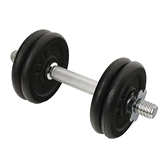
Adjustable dumbbell Researched
Why it earns a spot: A plain spin-lock dumbbell is cheap, small and adjustable. A light load (well under what most people call lifting) turns familiar bodyweight moves into something new.
- Goblet squats, holding one end of the dumbbell at the chest.
- One-arm rows with a hand on a chair or bench.
- Suitcase carry: one dumbbell in one hand, walk the hallway, switch hands.
Budget / DIY: Check secondhand listings first. Lots of people sell barely used dumbbells. One dumbbell is enough to start.
Barefoot shoes Researched
For walking and low-impact work, a wide, flat, flexible shoe keeps the feet close to the floor with clearer feedback underfoot. A cushioned running shoe still has a place for running and high-impact days. The shoe pages cover it: beginner barefoot shoes, barefoot vs traditional, and how to transition gradually.
Step 3 · then
Rings, a ball, a timer
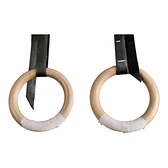
Gymnastic rings Researched
Why it earns a spot: Two independent handles that hang from a beam, a pull-up bar or a solid tree branch. They pack into a small bag and scale from simple hangs to harder work for years.
- Hangs with the feet on the ground for help, then without.
- Ring rows: body leaning back, feet forward, pull the chest to the rings.
- Support hold at the top of a dip, rings close to the sides.
Budget / DIY: Just hanging is a fine start. Wooden rings with long cam-buckle straps adjust for any anchor; check that the beam or branch is sound before putting full weight on it.
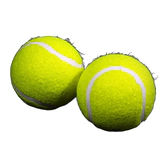
Tennis ball Researched
Why it earns a spot: Costs almost nothing, fits in a pocket, and works alone or with a partner at any level.
- Throw and catch against a wall, one hand, then the other.
- Learn a two-ball, then three-ball juggle.
- Partner catch games with made-up rules: weak hand only, catch while standing on one foot.
Budget / DIY: Old, dead tennis balls work fine for play. A can of regular-duty balls covers a household.
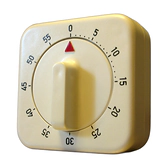
Interval timer (Gymboss) Researched
Why it earns a spot: A tiny clip-on timer that beeps through intervals, so the phone can stay in the bag and the session stays on track.
- Simple intervals: 40 seconds of work, 20 seconds easy, for 10 minutes.
- Timed hangs on the rings, a little longer each week.
- A walk-and-carry block: switch hands at every beep.
Budget / DIY: A kitchen timer, or a phone left on the far side of the room.
Step 4 · later
Nice to have
Worth it once the basics are a habit, or when a specific practice calls for them.
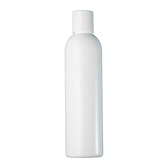
Liquid chalk Researched
Why it earns a spot: Dry hands hold on longer on rings and bars. Liquid chalk goes on once and doesn't dust up a bag or a car.
- One thin coat before a session of hangs or ring work.
- Bar and ring work on humid days.
- Climbing sessions.
Budget / DIY: Skip it until sweaty hands cut sessions short. Training without it some of the time keeps the grip honest.
Athletic tape Researched
Why it earns a spot: Cheap, and it covers a hot spot on the palm or wrist so a ring or bar session can keep going.
- Wrap a palm or wrist hot spot before hangs.
- A quick wrap over a small cut so a session isn't lost.
- Low-stick tape that peels off cleanly after a session.
Budget / DIY: Any cheap roll of white cotton sports tape. A multi-pack lasts a long time.
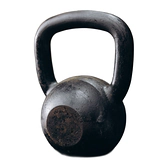
Kettlebell Researched
Why it earns a spot: One bell covers swings, squats and carries, and the offset handle feels different from a dumbbell. It costs more per kilo than a dumbbell, and a range of sizes adds up, so it comes after the dumbbell.
- Two-hand swings, learned slowly from a qualified coach or a well-regarded tutorial.
- Goblet squats holding the bell by the horns.
- Rack or suitcase carries around the yard.
Budget / DIY: One moderate bell, secondhand if possible. A second bell can wait.
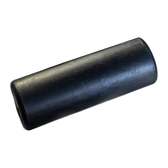
Foam roller Researched
Why it earns a spot: An easy excuse to spend time on the floor. Many people use one less once rolling around on the floor itself becomes part of the routine.
- Slow rolls along the upper back, hands behind the head.
- Lie lengthwise along the roller and let the arms open out to the sides.
- Use it as a prop for floor play, then put it away.
Budget / DIY: A lacrosse ball for small spots, or just rolling around on a rug.
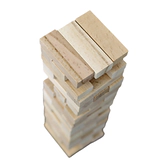
Wood blocks (Jenga-style) Researched
Why it earns a spot: A cheap way to practice dexterity: fine, careful control of hands and body, which most training skips.
- Balance a block on the head and walk, then squat slowly.
- Stack two blocks in a T on one palm and move the arm around.
- Partner game: blocks placed on the floor around you, pick them up without moving your feet.
Budget / DIY: Cut short blocks from a scrap 2x4 and sand the edges.
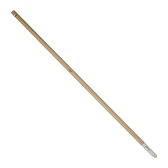
Mobility stick (dowel) Researched
Why it earns a spot: Cheap and light, and useful for slow overhead and hip range-of-motion play and for partner games.
- Pass-throughs: wide grip, take the stick overhead and behind, slowly.
- Hold it overhead during slow squats.
- Partner game: one person swings the stick low and slow, the other steps and ducks around it.
Budget / DIY: A broom handle, or a hardwood dowel about 4 ft long from a hardware store. No need to buy a branded stick.
Practice ball (DIY) Researched
Why it earns a spot: A ball on a cord, swung by a partner, turns reaction and coordination into a game. The idea comes from Fighting Monkey's practice ball.
- A partner swings the ball in slow arcs; the other moves out of its path.
- Trade turns swinging and dodging, speed up only when it feels easy.
- Catch the cord or ball on the swing, gently.
Budget / DIY: Thread a length of cord through a tennis ball and knot it. It needs a partner and a little instruction, so treat it as a later add.
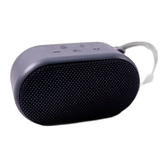
Portable speaker Researched
Why it earns a spot: For group sessions, music sets the mood and still lets people talk, which earbuds don't. Keep the volume considerate in shared spaces.
- A warm-up playlist for a group in the park.
- Rounds timed to songs: work for one track, rest for the next.
- Low background music for a garage session.
Budget / DIY: A phone speaker is fine for a solo session.
Sandbag
Lifting, carrying and walking with a load that shifts. The garage sandbag primer covers the WOLF budget bags and a DIY dry-bag build.
One-liners
- Slackline: fun if there are trees nearby and time to set it up; a curb or rail gives free balance practice in the meantime.
- Fingerboard: only worth it for people who already climb regularly; most others won't use one.
Related
- Living hub: sandbags, backward walking for knees, era training drinks.
- Mobility: the 5-day foot-forward warm-up and stick, band and roller basics.
- Shoes: wide and barefoot shoes by use and budget.
- Longevity: history and habit, no anti-aging claims.
Last updated: October 2026 · Researched picks, not hands-on tested. Check live prices on Amazon.